Bioinspired and Multifunctional Materials Systems and Structures
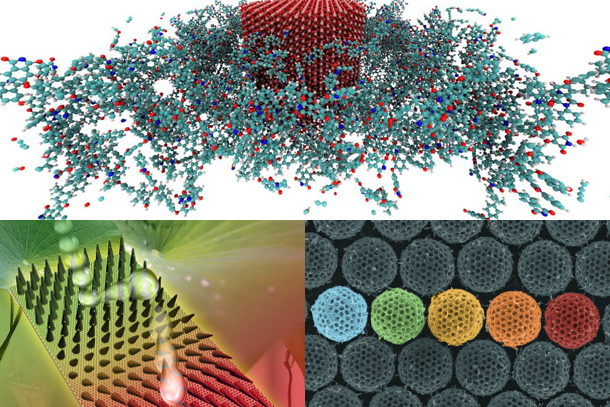
The bioinspired and multifunctional materials systems and structures research supergroup BI(MS)² research supergroup pioneers living materials and bio-inspired systems, integrating expertise from engineering, biology, and data science. We develop responsive materials that sense, adapt, and respond to their environments, from robotic fish that navigate using machine learning to living multifunctional materials that center sustainability. These advanced materials address critical engineering challenges by combining multiple properties and functions within a single platform, self-healing capabilities that extend material lifespans, self-regulating thermal management systems, and adaptive mechanical properties that respond to environmental stimuli without external control systems.
Motivated by the pressing need for more sustainable and resilient engineering solutions, our research targets a fundamental limitation in traditional materials: the inability to simultaneously optimize for competing properties like strength and toughness or adapt to changing conditions. Through biomimetic design principles and advanced manufacturing techniques, we create material systems that can achieve what conventional materials cannot, such as structures that strengthen under stress, surfaces that modulate friction coefficients in real-time, and components that reconfigure to optimize performance across varied operating conditions.
Our collaborative network, including multiple mechanical research labs and the Convergence Center for Living Multifunctional Material Systems (LiMC²) center, advances fundamental understanding of biological systems and materials while creating transformative technologies through advanced manufacturing, multiscale modeling, and artificial intelligence. Key applications include underwater robotics, acoustic metamaterials, biosensors, adaptive architecture, novel energy harvesters, smart composites with integrated sensing and actuation, programmable mechanical metamaterials, and sustainable material systems that bridge laboratory innovation with societal impact. By fundamentally reimagining the relationship between structure, properties, and function, our research opens new paradigms for addressing complex engineering challenges across scales, from microfluidic devices to large-scale infrastructure, with materials that are not just components, but active participants in system performance.
Our team brings together pedagogical and research expertise spanning autonomy, sensors & control systems, fluid mechanics, power generation & storage, robotics, advanced manufacturing, soft & bio-hybrid materials, polymers & multifunctional composites, surfaces & interfacial engineering, and data-driven modeling and AI for material design. Together, this unique combination of expertise allows us to approach engineering and scientific challenges from complementary perspectives – linking biological inspiration with cutting-edge materials, mechanics, and data science. This synergy enables solutions that are both technically innovative and fundamentally insightful.
To amplify our collaborative impact, the BI(MS)² supergroup focuses on:
- Encouraging multi–principal investigator seed grants to foster interdisciplinary research.
- Facilitating student and faculty exchanges with the University of Freiburg, strengthening our international partnerships.
- Hosting workshops with government laboratories to connect academic innovation with national research priorities.
- Organizing seminars featuring federal sponsors to promote engagement and visibility of our collective research.
Research Super Groups
- Bioinspired and Multifunctional Materials, Systems, & Structures
- Biomechanics & Biodevices
- Complex Flows
- Engineering Education Research
- Advance Energy Systems
- Product Design & Manufacturing
- Systems, Controls, & Robotics
- Turbomachinery & Propulsion
Faculty